
My Second MBA
Nyeleti Sue-Angel Nkuna
When I accepted the role of Interim President of ProWoc, I felt honoured but apprehensive, and much more the latter.
I had been Ifeoma Okpala Aina’s number two for some time, and I genuinely admired her leadership. Anyone who has met Ify, even briefly, will attest to her strong leadership and natural flair for bringing people along. A visionary at heart, with the drive to turn ideas into action.
When the opportunity to step in during her maternity leave arose, I was deeply happy for her.
But stepping into the presidency meant stepping into shoes I didn’t feel prepared for, nor had I coveted. I was a very happy number two and had not been quietly positioning myself for the presidency or waiting for my turn.
So here I was, taking responsibility for an organisation I cared deeply about, knowing that I would eventually hand it back. That made the responsibility feel even more tangible: I wanted to hand it back stronger than I had found it.
The apprehension wasn’t about whether I could contribute. I know myself well enough to know that when I take something on, I go all in, and I knew that I would demand that of myself.
It became my second MBA.
My first MBA gave me frameworks, models and theories for understanding organisations. This one was an education in what organisational management looks like when the organisation is real: when people are volunteers, resources are finite, history matters, leadership changes, and the decisions you make affect people you care about.
There are four things I am taking with me.
1. Understanding What I Inherited
Seven years ago, I walked into the very first ProWoc gathering, before it even had a name. Still relatively new to Denmark, I found something powerful in being in a room intentionally created for women like me: women navigating a new country, carrying ambitions of their own, and sharing experiences that rarely needed explanation. For a few hours, there was the freedom to simply be, to connect, and to imagine out loud what might be possible.
The strength was clear: ProWoc had built a strong community, a clear purpose and a credible voice in society.
The growth area was equally clear: how do you reconcile that ambition with the reality of being a volunteer-driven organisation without full-time operational support?
ProWoc has never lacked a vision of what good looks like. The challenge is creating the conditions for a volunteer organisation to sustainably live up to that ambition.
2. I had to decide what was mine to change
Once you inherit something, the next question is: what is actually mine to change?
In a volunteer membership organisation, where leadership rotates and people naturally move through different terms, change cannot depend on one person driving it through. It needs enough continuity to outlast the person who started it.
The challenge, then, is not simply to initiate change, but to create enough ownership around it that it can continue through the next leadership cycle.
One idea from our strategic conversations stayed with me: what brought us here is not necessarily what will take us where we want to go.
That doesn’t mean rejecting what came before. It means being honest about what needs to evolve.
3. Tension between legacy and renewal
ProWoc has a strong legacy. Those who founded and shaped it hold institutional knowledge that cannot simply be recreated: why decisions were made, what has been tried, which relationships matter, and how the organisation has evolved.
At the same time, newer leaders bring different experiences, perspectives, energy and tenacity about what the organisation could become. Those perspectives aren’t simply welcome; they are necessary.
The question is what is worth carrying forward.
Not everything that is familiar is fundamental. Some things are part of an organisation’s identity; others have simply endured because they have always been done that way.
4. The Role of Good Counsel
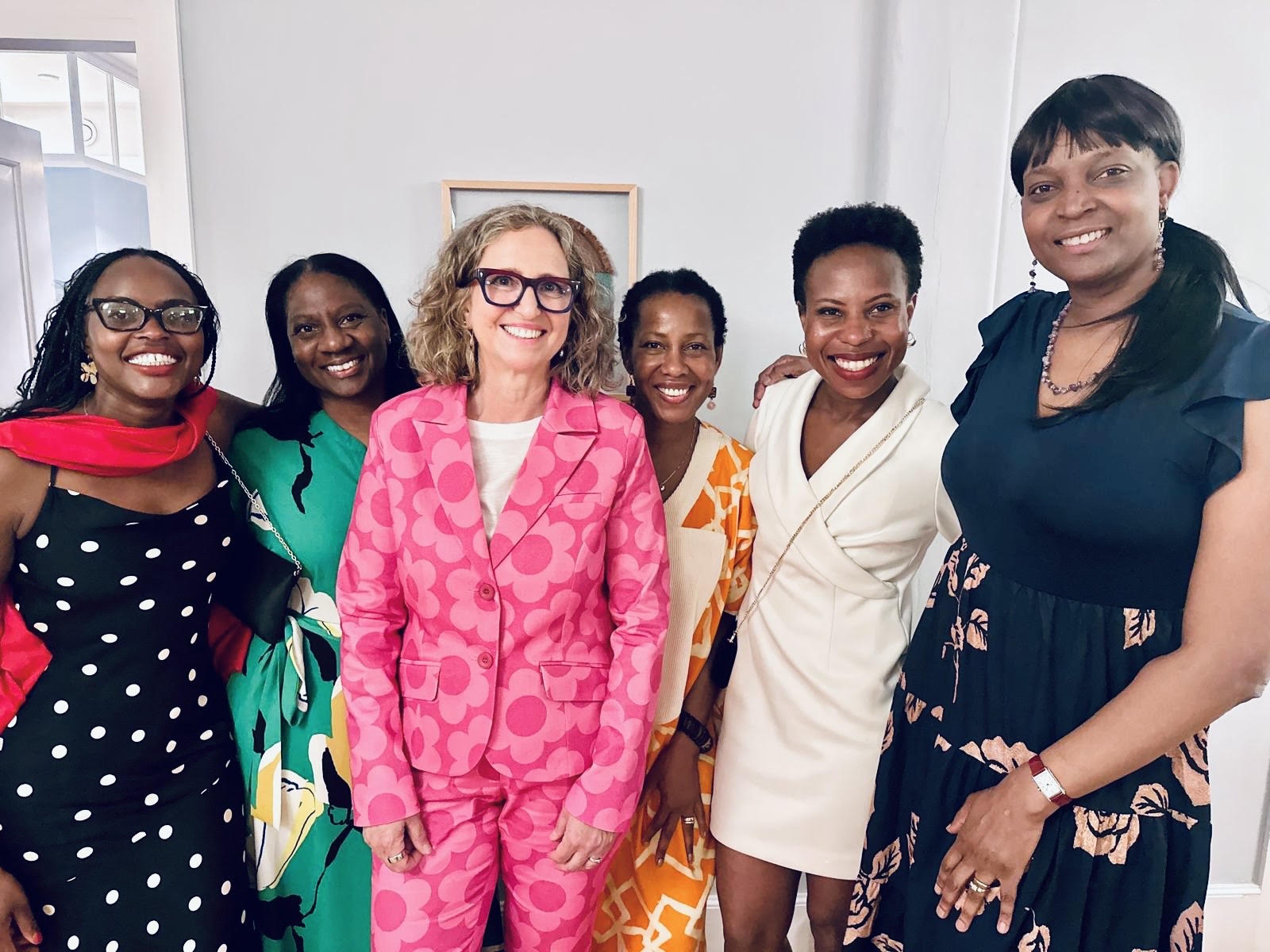
I stayed in close communication with ProWoc’s founders, Selim Ablo-Nielsen and Phaedria Marie St. Hilaire, and with Annelise Goldstein, who serves on the ProWoc Advisory Board. Their perspectives gave me a view of ProWoc that extended beyond the present moment. Our one-to-one conversations became lessons in leadership, life and navigating both. They are lessons I know I will carry well beyond my time at ProWoc.
I also had Jackie Ogutu, our former VP and a dear friend. Her role in this chapter was different. She knew ProWoc, but she also knew me and what mattered to me beyond it. When everything threatened to become about the role, our conversations gave me space to step outside it and reconnect with myself.
Between them, I gained perspective on both ProWoc and myself. They also gave me the space to step outside the immediate demands of the role and ask a different question:
What do I get to leave behind when my term comes to an end?
In an organisation where leadership rotates, institutional knowledge cannot depend on one person remaining in the room. As Interim President, I was taking custody of something I knew I would eventually hand back. Success was not simply what I accomplished, but whether I left enough clarity and continuity for those who came after me to move forward.
This experience also taught me something about myself: how to balance my instinct to take ownership and responsibility with protecting my own capacity.
I came into this role apprehensive because I knew what this community carries. I leave it with a deeper appreciation of what it means to be entrusted with it.
My first MBA taught me how to think about organisations. My second taught me what it means to care for one.